Women of the Land: Hoima’s Soil, Their Livelihood
Across Hoima in Western Uganda, women are turning small parcels of land into sources of food, income, and hope, while confronting the growing pressures of climate change, land insecurity, and rising farming costs.
By Beatrice Rukanyanga a Human Rights defender in Hoima District, Uganda.
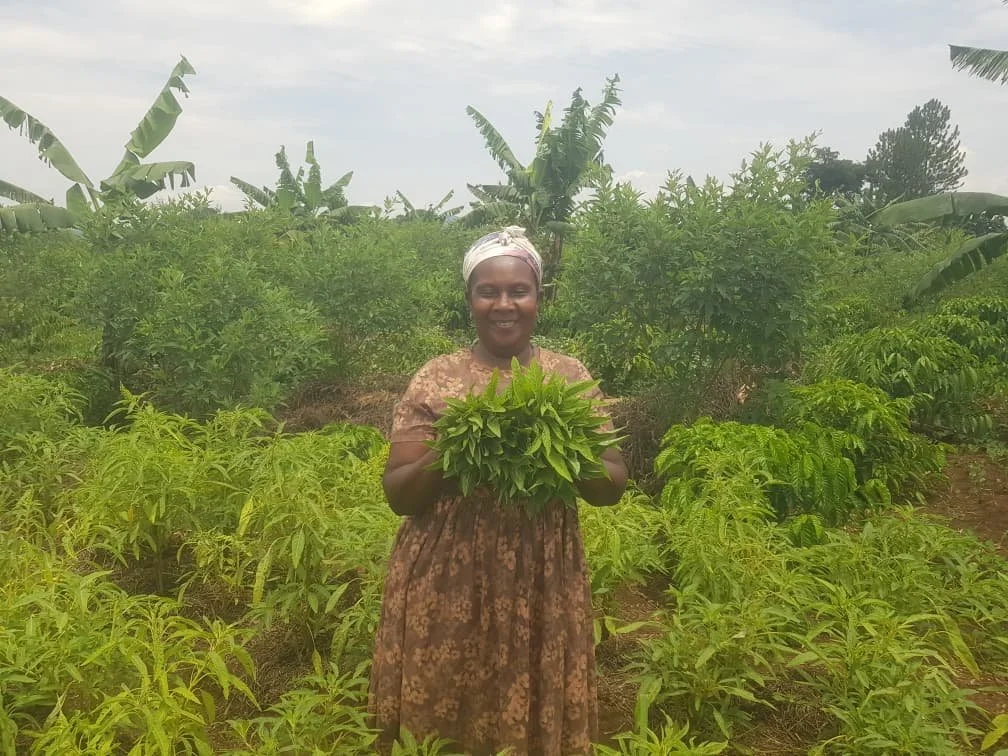
Annamary is very happy with her harvest during the dry season
Before the sun rises over the hills of Hoima, the sound of hoes striking the earth can already be heard in the gardens. Women bend over rows of maize, beans, groundnuts, pineapples, coffee, and vegetables, their hands deep in the soil that has sustained their families for generations.
For many women in Hoima, land is more than a place to grow crops. It is a kitchen, a source of school fees, and, increasingly, also a foundation for their independence.
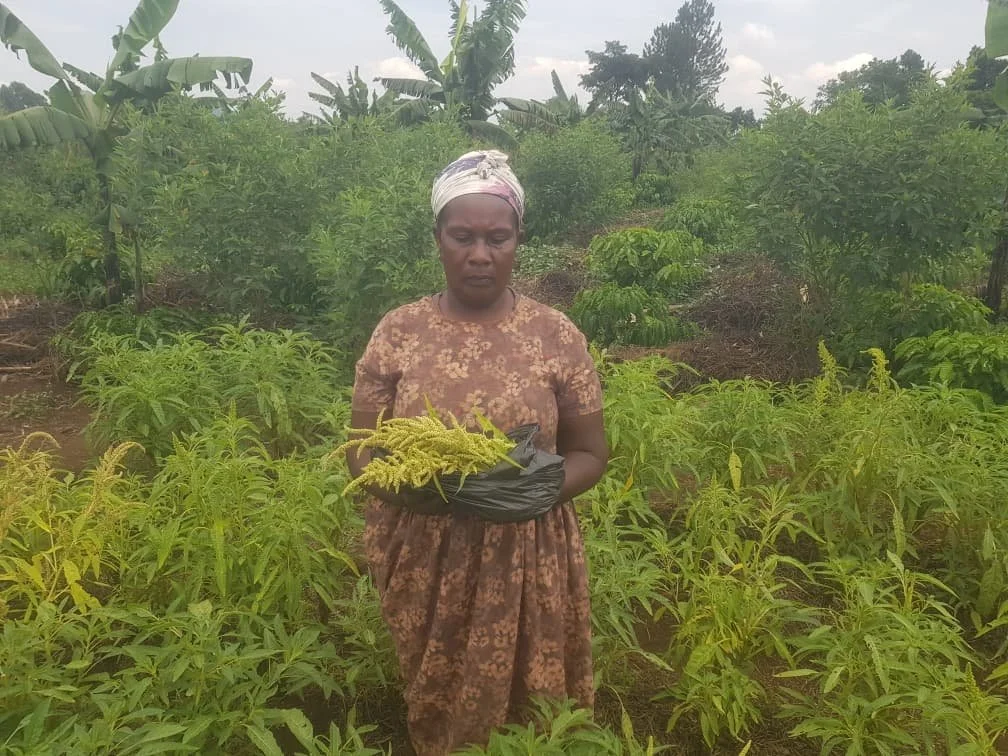
Annamary harvesting vegetable seeds to plant in the next season
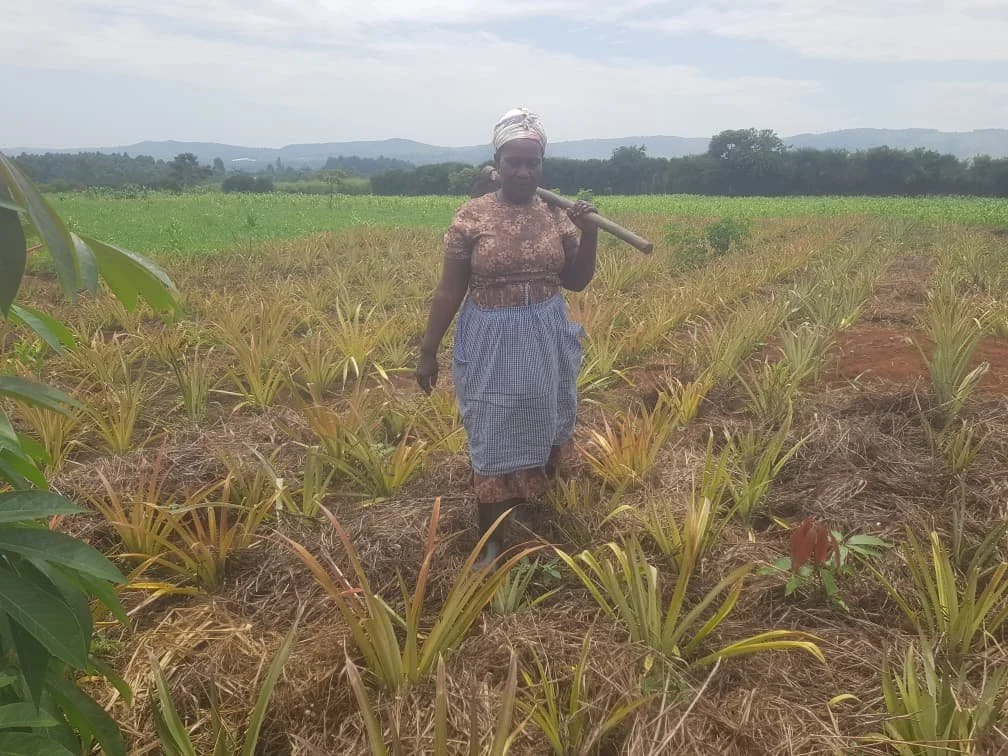
Annamary Kabonesa is a resident of Kitoba sub-county, a rural community in Hoima District, Uganda. She walks through her garden inspecting her crops. She says farming has enabled her to support her household, despite the many challenges smallholder farmers like her face.
“When I have land and something to plant, I am assured of feeding my family and earning some money to meet my domestic needs,” she says.
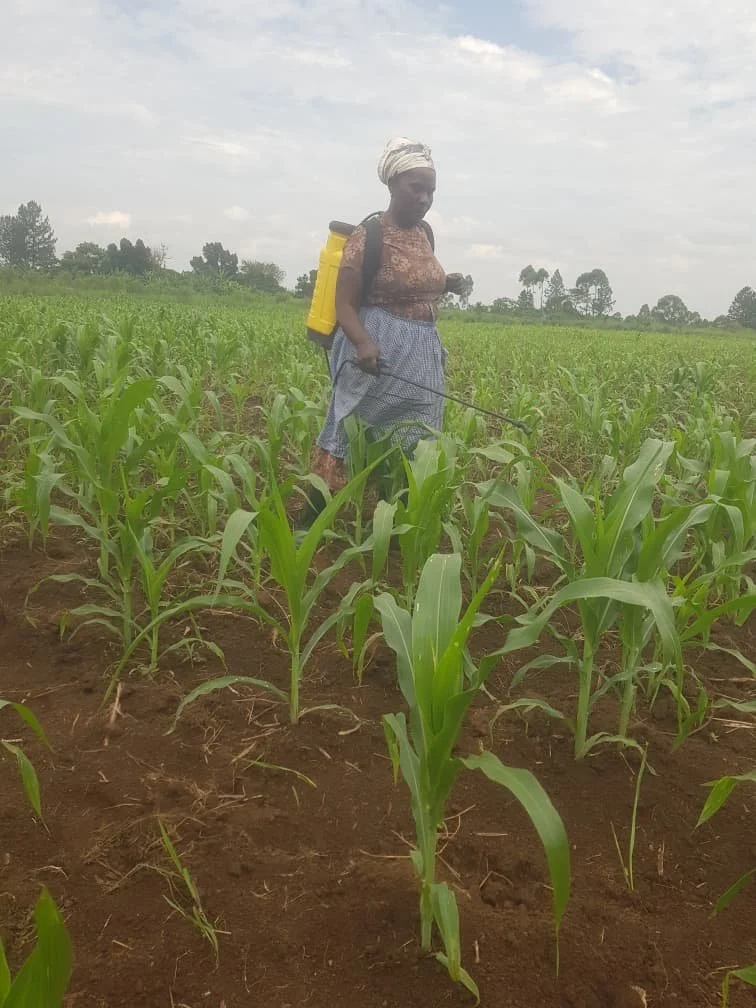
Annamary spraying maize with organic fertilizer after weeding
Her story mirrors that of many women whose livelihoods are tied closely to land. They grow food for household consumption and sell the surplus to pay for school fees for their children and meet other basic life necessities.
Annamary does not have full access to land, since she farms on family land, which means she lacks control over it. Some women farm on family land, rented land or land belonging to their husbands. This makes long-term investment difficult, particularly when women are uncertain about whether they will be able to continue accessing the land they cultivate.
For the women who have secure land rights, farming provides an important pathway to economic empowerment. Some are diversifying beyond staple crops into vegetables, poultry, and livestock.
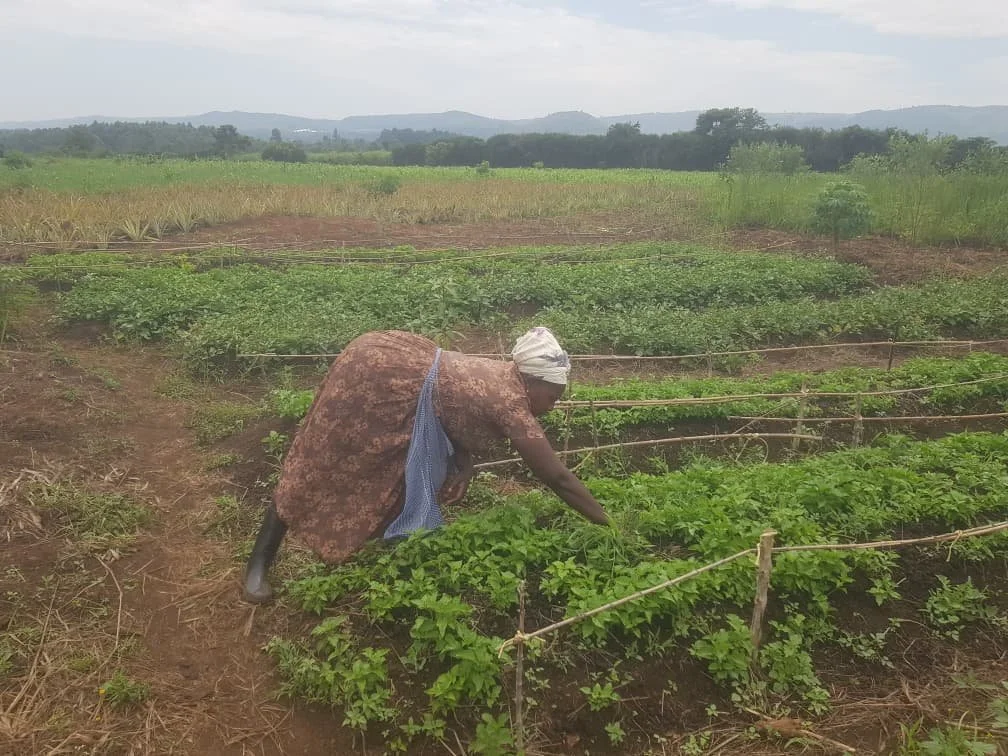
Annamary looking after vegetable nursery beds
Women farmers are also increasingly embracing farming practices that protect the soil. Intercropping, mulching, composting, agro-forestry, and using locally available organic materials to maintain soil fertility and reduce dependence on expensive farm inputs.
Climate change, however, is making farming more difficult. Unpredictable rainfall, prolonged dry spells, pests and declining soil fertility can reduce harvests and household income.
“Sometimes you prepare the garden expecting rain, but then the rain is delayed. And when the rain finally comes, it may be too much!” says Annamary.
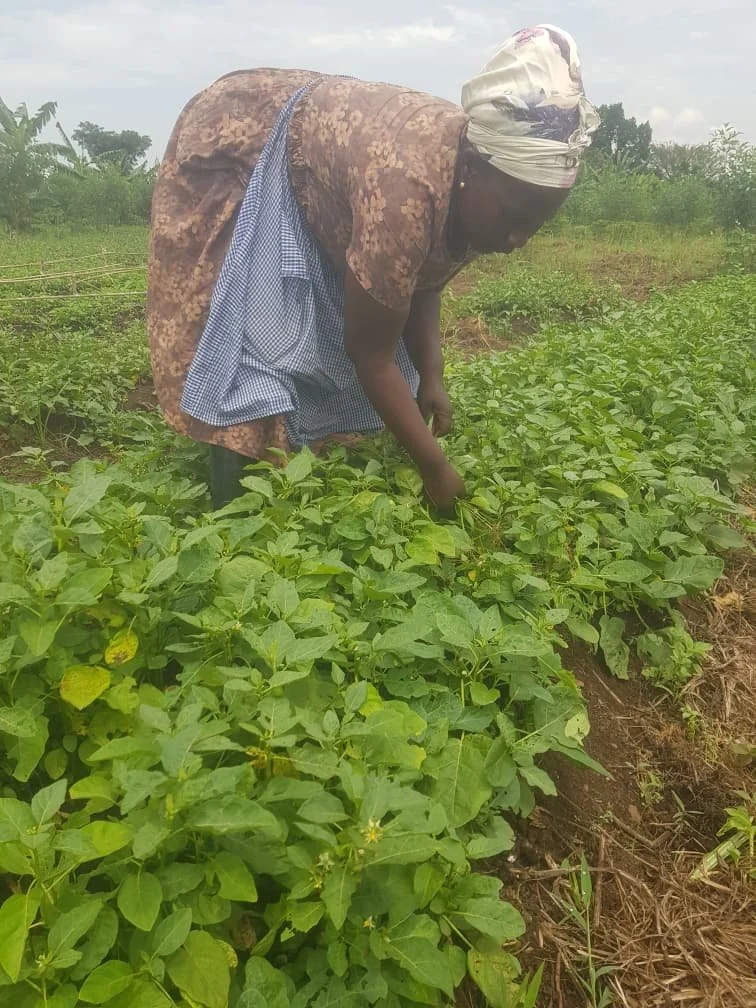
Annamary looking after vegetable nursery beds
Women farmers also face challenges accessing affordable credit, quality seeds, extension services, markets, and storage facilities.
When produce is sold immediately after harvest, farmers receive low prices that undermine their significant time and effort they have put into cultivating the crops. Women are proven that agriculture can be both a livelihood and a business.
Women’s work carries lessons for the next generation. When children see their mothers cultivating land, keeping animals, and managing farms, agriculture becomes more than subsistence but an economic activity worthy of investment and innovation.
The future of women and land in Hoima will therefore depend not only on how much land women can access, but also on whether they can make meaningful decisions about it and benefit from what it produces.
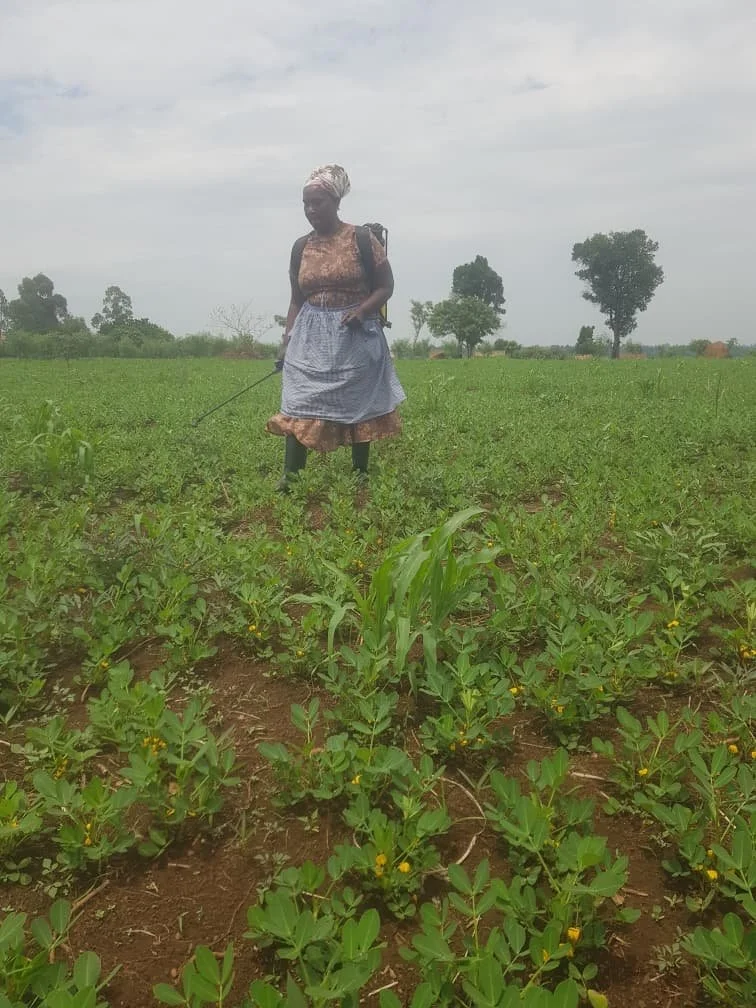
Annamary spraying Groundnuts with organic fertilizer made at the farm
For women like Annamary, the message is simple: give women secure access to land, knowledge, finance, and markets, and the benefits will extend beyond individual households.
“Land gives us food and gives us hope,” she says. “If we take care of it, it can take care of us too.”
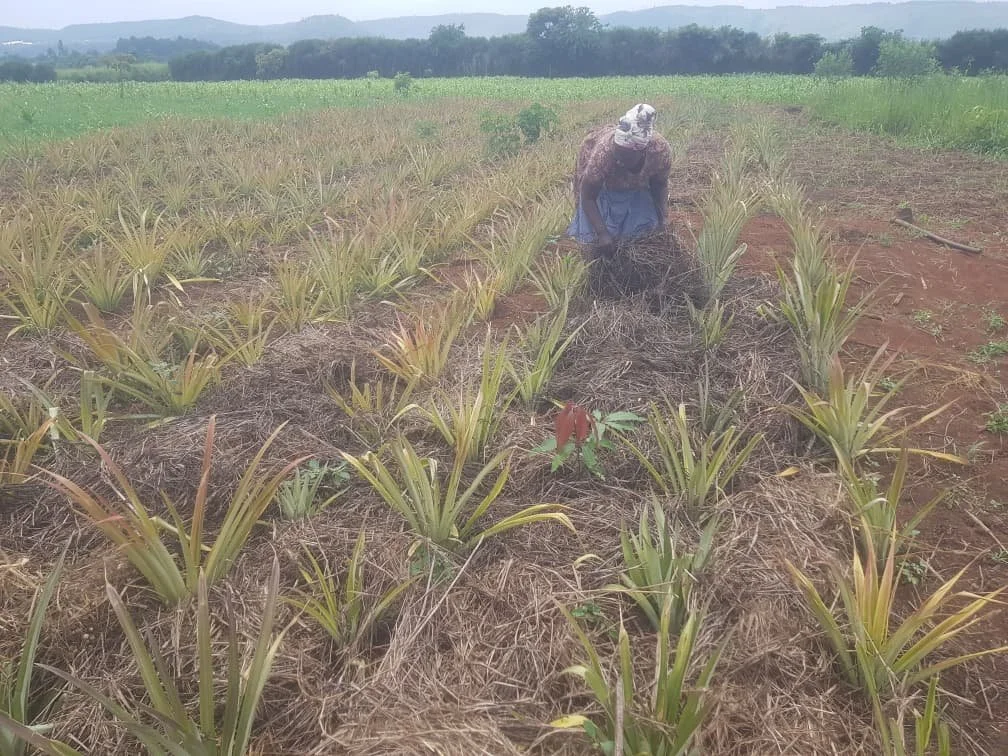
Annemary busy mulching pineapple
In Hoima District, Uganda, women like Annamary feed this nation before sunrise, yet go to bed hungry! They are the backbone of our agrifood system, but they farm on lands without titles, finances, and under pressure of climate change and human-wildlife conflicts
It is well known that women farmers are key agents of change. It must be land in her names, seeds in her land and a seat at the decision- making table.
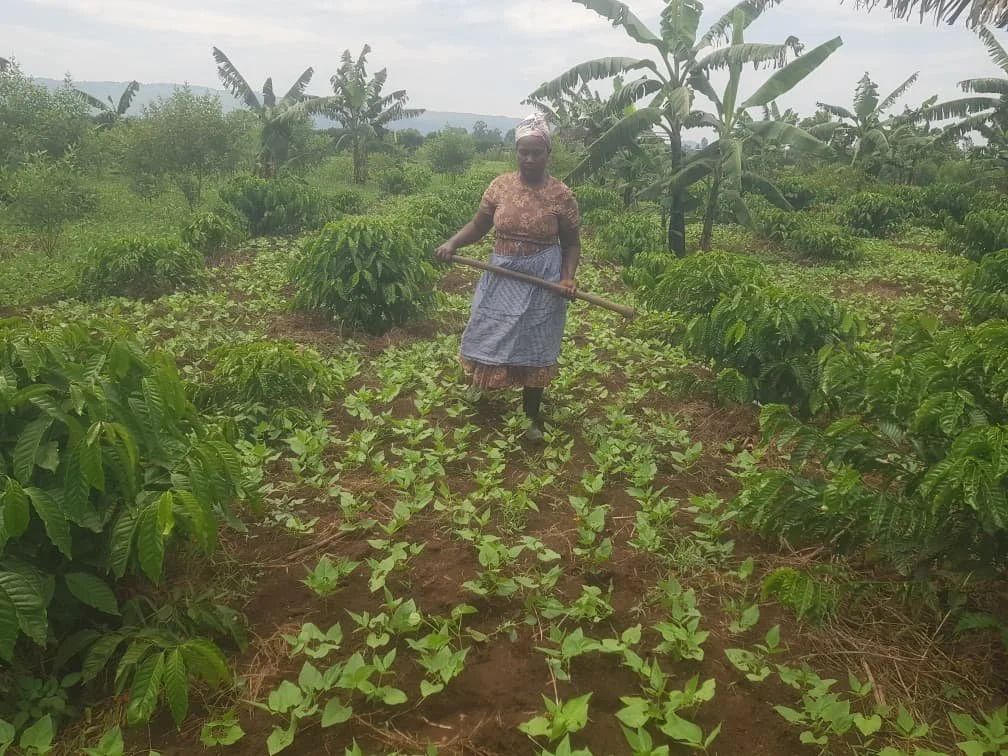
Annemary feels good, after harvesting vegetables for her home consumption.
Today, from the garden of Hoima District to the global stage, the women call upon the international community, the private sector, and other agencies to:
Support land ownership for women through registration, which secures land titles to increase household food security.
Move beyond emergency food aid, invest more in climate-resilient farming enterprises, and resistant value chain.
In Hoima, the story of women and land is ultimately a story about dignity, resilience, and the determination to build a better future starting from the soil beneath their feet.
ll text and photographs by Beatrice Rukanyanga, beatrice.rukanyanga@gmail.com